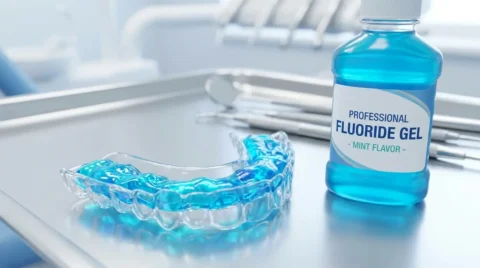

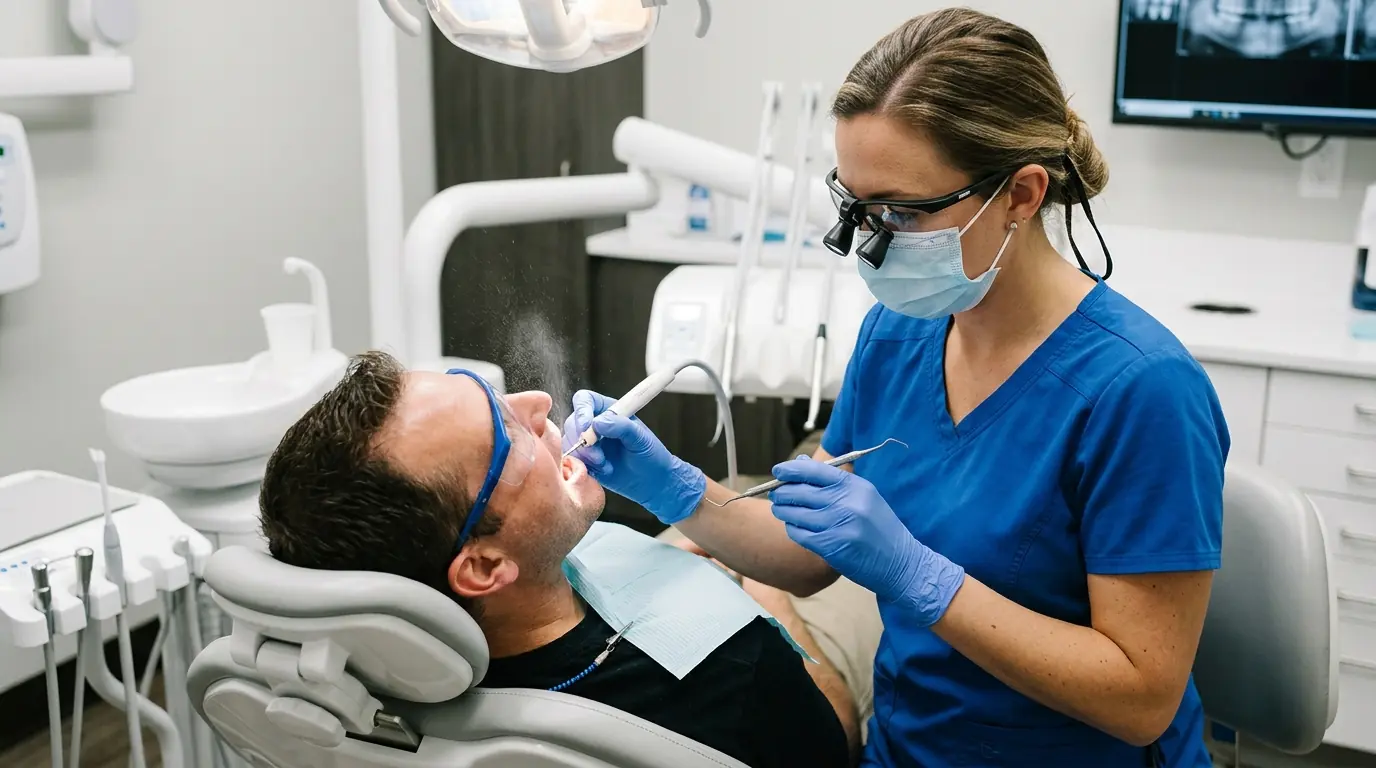
Non-surgical gum disease treatment is possible. Dentists use it every day as the first line of defense. Scaling, root planing, and laser therapy clean out bacteria below the gumline.
Antimicrobial rinses and antibiotic gels also calm inflammation. These treatments give gum tissue a real chance to reattach.
Research shows pocket depth drops by close to 40% with scaling and root planing. Periodontists almost always try non-surgical options before considering surgery.
The CDC reports nearly half of American adults over 30 have gum disease. Most of these cases sit at a stage where non-surgical care works well.
Surgery is only needed when pockets stay deep after repeated cleanings. It is also required when bone loss progresses, or the disease becomes severe.
What Non-Surgical Gum Disease Treatment Actually Means
Non-surgical treatment fixes gum problems without cutting the tissue. Dentists reach for these options first because they carry less risk. They also need a shorter recovery window and cost less than surgery.
The main goal remains very simple. Care teams remove plaque and tartar sitting below the gumline. They reduce harmful bacteria, and the gum tissue heals around each tooth.
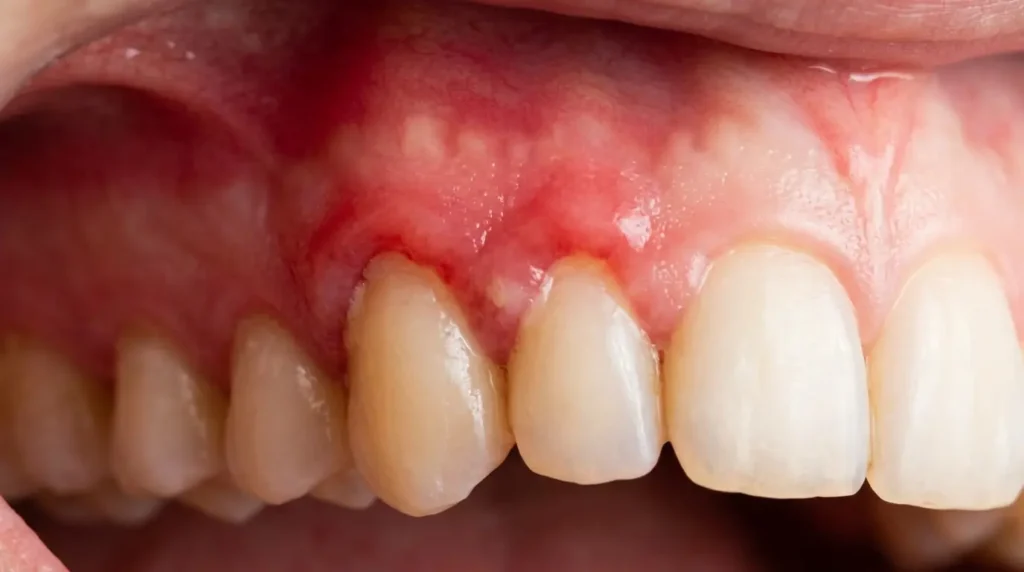
Gingivitis is the earliest stage of gum disease. It almost always responds well to non-surgical care. Early to moderate periodontitis involves some bone damage, but it often heals without surgery too.
The American Academy of Periodontology treats non-surgical therapy as the standard starting point. Surgery only comes up once non-surgical options fail to control the disease.
How Common Is Gum Disease?
Gum disease affects a massive share of the population. This scale explains why non-surgical treatment gets so much research attention.
The CDC found that 47.2% of American adults aged 30 and older have periodontal disease. That figure works out to roughly 64.7 million people.
The percentage climbs to 70.1% in adults aged 65 and older. Men show higher rates than women, at 56.4% versus 38.4%. Current smokers show a rate of 64.2%, which is well above average.
The scale of this problem stretches far past the United States. The Global Burden of Disease Study 2021 estimates over one billion people worldwide live with it.
Severe periodontitis affects close to 11% of the global population. That is roughly 743 million people, making it the sixth most common health condition.
Researchers project this number will reach 1.56 billion by 2050. That represents a 44% jump from 2021 figures.
Scaling and Root Planing: The Backbone of Care
Scaling and root planing is the most common form of non-surgical treatment. A hygienist uses hand instruments or ultrasonic tools to scrape away hardened tartar. Root planing then smooths the root surface.
Clinical research backs up how well this procedure performs. One review found deep pockets over 6mm shrank by an average of 2.16mm. Moderately deep pockets between 4mm and 7mm shrank by about 1.29mm. Research recorded a 57% average drop in bleeding after treatment.
A separate trial compared scaling and root planing against a laser approach. Scaling and root planing alone cut pocket depth by 39.5%. It also reduced plaque buildup by 90%.
Pocket depth plays a big role in treatment success. Pockets under 3mm respond the fastest to scaling. Pockets between 3mm and 5mm take more effort to clean fully. Whereas pockets deeper than 5mm prove the hardest to reach with hand tools alone.
Laser Therapy Options
Laser-assisted treatment gives patients another non-surgical path. One protocol called LANAP has picked up considerable research interest. LANAP uses a laser to target and remove infected tissue inside the pocket. It spares healthy tissue and encourages new attachment tissue to form.
A study compared LANAP against standard scaling and root planing. LANAP produced a 44.4% reduction in pocket depth.
Standard scaling and root planing produced a 39.5% reduction. LANAP showed a 96.87% drop in plaque index compared to 90% for standard scaling.
Bleeding dropped by 92.85% with LANAP versus 88.33% with standard tools.
Researchers noted LANAP held its results more consistently over a full year. Standard scaling showed some slippage in attachment levels after six weeks.
Antibiotics and Antimicrobial Therapy
Dentists often pair scaling and root planing with antibiotics to strengthen results. They place local antibiotic gels or fibers directly into the gum pocket after cleaning.

These gels release medication over time to target hidden bacteria. A systematic review compared scaling alone against scaling plus local antibiotics.
The combination produced statistically better pocket depth and attachment results.
Chlorhexidine mouth rinses and other antimicrobial solutions also support healing. A study compared herbal extract rinses and chlorhexidine rinses.
Both options brought real improvement in plaque scores compared to baseline measurements.
Chlorhexidine edged out the herbal solution by a small margin. Dentists recommend a short course of rinse right after cleaning. Fresh gum tissue stays vulnerable to bacteria during the first few weeks.
Long-Term Effectiveness
Long-term data on non-surgical treatment paints a positive picture. A nine-year study followed HIV-positive patients through scaling and regular maintenance visits.
Patients showed a mean pocket depth reduction of 0.4mm by the end. They also lost zero teeth across the entire nine-year period.
Long-term stability depends heavily on regular maintenance visits every three to four months. Oral bacteria rebuild their colonies within weeks of a professional cleaning.
A systematic review compared long-term outcomes between scaling and surgery. It found no statistical difference in clinical results over time.
The review also found that adding local antibiotics produced better results than scaling alone. These findings support non-surgical care as a solid long-term strategy.
Home Care Support
Non-surgical gum disease treatment works best when patients back it up with steady home care. You should brush twice a day with a soft brush.
You must floss daily and use an antimicrobial rinse to keep bacteria levels down. Dentists often recommend an electric toothbrush for recovering patients.
The vibration disrupts plaque along the gumline more thoroughly than manual brushing.
Diet and lifestyle choices shape how well gum tissue heals too. Smoking programs show better healing outcomes among patients who quit.
Cutting back on sugary foods limits the fuel that oral bacteria feed on. Regular dental visits every three to six months catch new pocket depth increases early.
Also read: