
Rising temperatures make summer health a challenge for many parents. Children lose fluids quickly through sweat during hot days. Heat often reduces their appetite and makes them feel tired. A smart summer diet plan keeps your child hydrated and energetic. This guide expands on healthy food choices and hydration tips to protect your child from the heat.
Why Kids Need a Specific Summer Diet
Children have higher hydration needs than adults during the summer months. Their bodies struggle to regulate temperature as efficiently as ours. A proper diet supports their growing immune systems and keeps energy levels steady. Without the right nutrients, kids might face heat exhaustion or digestive issues.

The Power of Proper Hydration
Water is the most important part of a summer diet. You should encourage your child to drink water every one to two hours. Do not wait for them to say they are thirsty. By the time a child feels thirsty, they may already be slightly dehydrated.
Natural drinks offer better benefits than store-bought options. Coconut water provides essential electrolytes to replace what kids lose through sweat. Fresh fruit juices give them vitamins and natural sugars. You must avoid soft drinks and packaged juices. These drinks contain high amounts of sugar that can lead to energy crashes.
Light and Digestible Meals
Heavy or oily foods make children feel sluggish and uncomfortable in the heat. Switch to cooking methods like boiling, steaming, or grilling. These methods preserve nutrients without adding heavy fats. Yogurt-based dishes are excellent because they have a natural cooling effect on the body.
Seasonal Fruits for Hydration
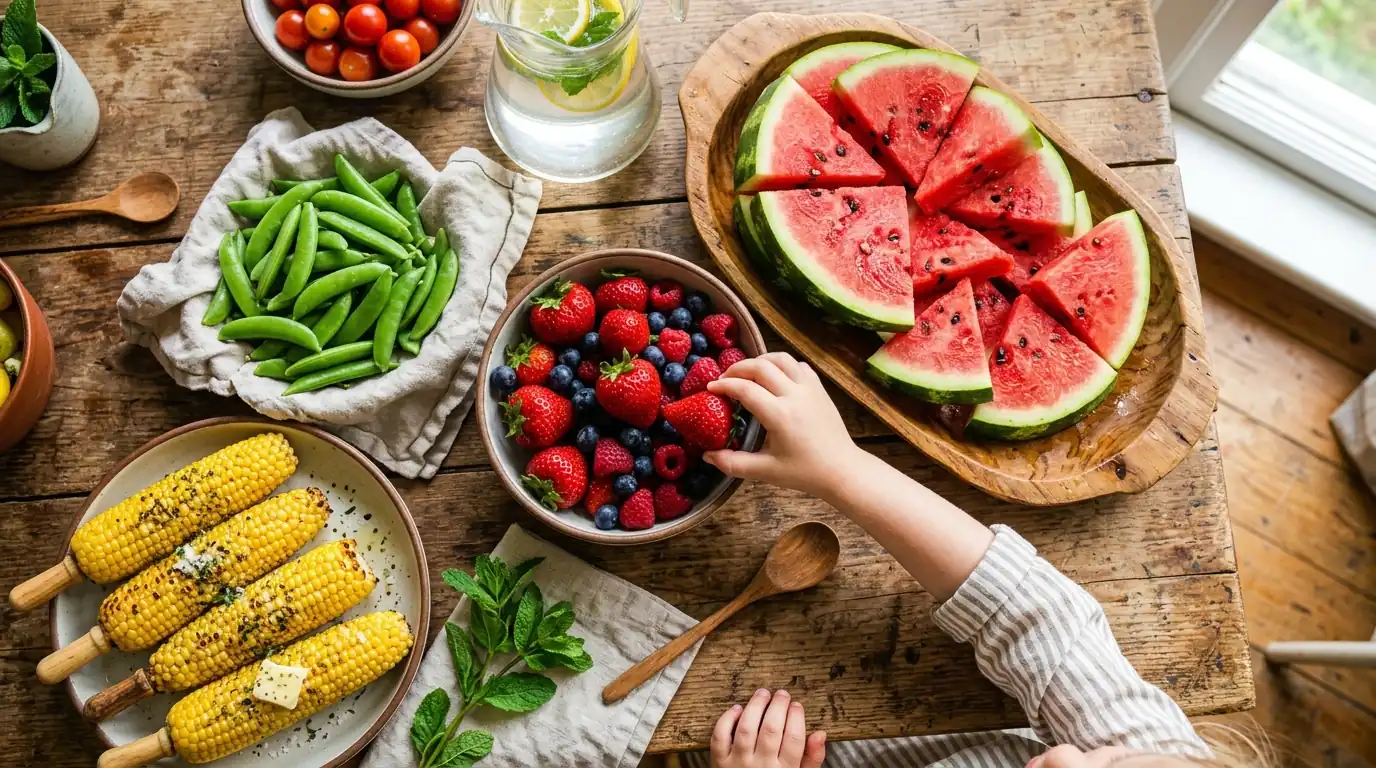
Summer brings a variety of fruits that are perfect for children. Watermelon is the best choice because it contains a very high percentage of water. Mangoes provide vitamin A for eye health. Oranges and papayas offer vitamin C to boost immunity. Cucumbers are also great snacks because they are crisp and hydrating.

A Daily Meal Schedule for Summer
Structuring meals helps maintain consistent energy levels throughout the day.
Early Morning (7:00 AM – 8:00 AM)
Start the day with a glass of room-temperature water. Give your child four to five soaked almonds and one date. Soaking almonds makes them easier to digest and releases more nutrients.
Breakfast (8:30 AM – 9:30 AM)
Breakfast should be filling but not greasy. Serve an egg with whole-grain toast and a side of fruit. A banana milkshake or a peanut butter sandwich provides good protein. Yogurt mixed with a little honey is another refreshing option.
Mid-Morning Snack (11:00 AM)
Use this time for high-water foods. A bowl of chilled watermelon or a glass of coconut water works perfectly.
Lunch (1:00 PM – 2:00 PM)
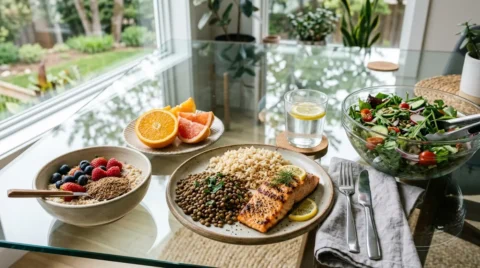
Lunch should include a balance of carbohydrates and proteins. Traditional meals like lentils (daal) with rice and yogurt are easy on the stomach. You can also serve grilled chicken with a side of steamed vegetables. A fresh salad helps add fiber to their diet.

Evening Snack (4:00 PM – 5:00 PM)
Kids often get hungry after playing. Offer fruit chaat or a fruit smoothie. A glass of lassi is a traditional cooling drink that kids enjoy. A small handful of dry fruits can provide a quick energy boost.
Dinner (7:00 PM – 8:00 PM)
Keep the final meal of the day very light. Vegetable soup or grilled fish are excellent choices. Light meals help children sleep better during warm nights.
Before Bed
A glass of milk before bed supports growth and helps the body recover overnight.
Foods to Avoid
Certain foods can cause heat stress in the body. Avoid fried and spicy foods as they increase internal body heat. Limit junk food to no more than once a week. High-sugar items and carbonated drinks offer no nutritional value and can cause dehydration.
Recognizing Dehydration
Parents must stay alert for signs of dehydration. Look for dry or cracked lips and unusual fatigue. Dark-colored urine is a clear sign that a child needs more fluids. If your child feels dizzy, move them to a cool place and give them water immediately.
Creative Tips for Parents
Make healthy eating fun to keep kids interested. Use colorful plates and cut fruits into fun shapes to attract their attention. Add variety so they do not get bored with the same meals. Always carry a water bottle when you go out for walks or trips to the park.
FAQs
Q1: What should kids eat in summer?
Light, hydrating foods like fruits, yogurt, juices, and simple home-cooked meals.
Q2: How much water should kids drink in summer?
At least 6–8 glasses depending on age and activity level.
Q3: Which fruit is best for kids in summer?
Watermelon is the best due to its high water content.
Further Reading
For more information on pediatric nutrition and summer safety, visit these high-authority resources:
-
The Mayo Clinic offers comprehensive advice on preventing dehydration in children.
-
Harvard School of Public Health provides a Healthy Eating Plate for Kids which details ideal portion sizes.
-
The American Academy of Pediatrics discusses the importance of water and healthy drinks for young athletes and active children.
-
Read research from the National Institutes of Health (NIH) regarding the nutritional benefits of yogurt for digestive health.
-
EatRight.org from the Academy of Nutrition and Dietetics shares tips on summer food safety and hygiene.
Fact checked by: