

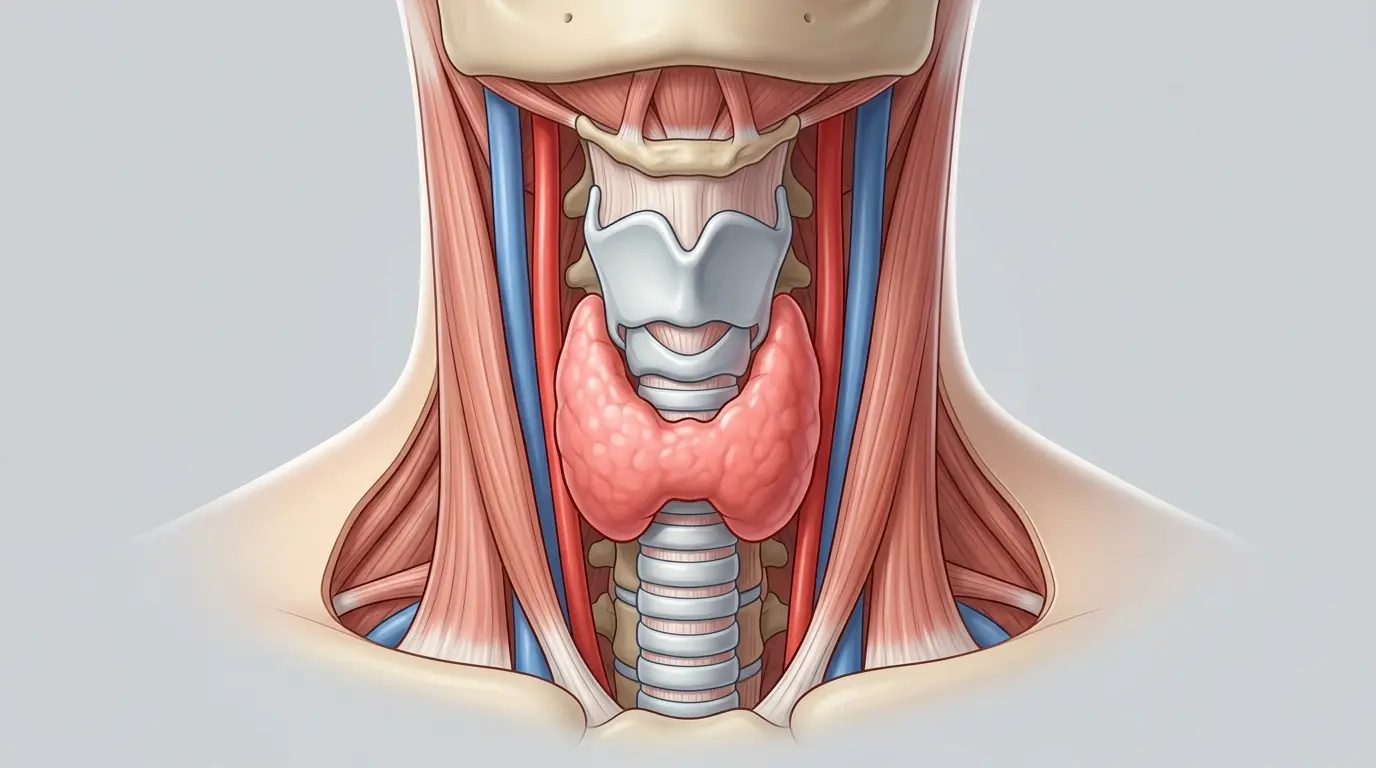
The thyroid gland is a small butterfly-shaped gland. It is located at the front of the neck, just below the Adam’s apple and wrapped around the windpipe (trachea). It is part of the body’s endocrine system. This system controls many body functions through hormone production.
The thyroid produces hormones that are essential for heart rate, digestion, mood, and other functions crucial to human health. Specifically, the thyroid produces two primary hormones:
-
T3 (triiodothyronine)
-
T4 (thyroxine)
These hormones keep body processes running smoothly. This includes your metabolism, mood, breathing, and heart rate. You can learn more about how these hormones affect the body from the StatPearls Medical Review.

Detailed Functions of the Thyroid Gland
The thyroid gland acts as the main controller of your metabolism. It releases T3 and T4 directly into your bloodstream. Your cells then use these hormones to set the speed of various chemical activities. The thyroid gland helps regulate many vital body processes:
Metabolism and Weight Control
Thyroid hormones decide how fast your body converts food into energy. A healthy thyroid keeps your metabolism at a steady pace. This helps your body burn calories efficiently and maintains a stable weight.
Temperature Regulation
The thyroid works like an internal thermostat. It tells your cells to generate heat by burning energy. When thyroid hormone levels change, your ability to handle heat or cold changes as well.
Heart Rate and Blood Flow
Thyroid hormones directly affect your cardiovascular system. They control how fast and how hard your heart beats. They also affect blood pressure by relaxing the muscles in your blood vessel walls.
Growth and Development
Infants and children need thyroid hormones for proper physical development. These hormones control the growth of bones and the maturation of body tissues.
Brain Function and Mood
Your central nervous system relies on a steady supply of thyroid hormones. They help you stay alert, focused, and awake. Changes in these hormones can quickly alter your mood and mental clarity.

Digestion
The thyroid controls the speed at which food moves through your digestive tract. It stimulates the muscles in your stomach and intestines to keep digestion regular.
Muscle and Bone Health
Thyroid hormones help your body break down old bone tissue and rebuild new bone. They also ensure that your muscles contract and relax with the right amount of force.
Location and Structure of the Thyroid Gland
The thyroid gland sits in the lower front part of the neck. It lies just below the voice box (larynx) and right in front of the trachea.
The gland has a distinct shape that features two large sides. These sides are called the left and right lobes. A thin bridge of tissue connects these two lobes in the middle. This bridge is called the isthmus. The isthmus sits right against the front of your windpipe. This unique structure allows the gland to hug the trachea closely. You can view detailed anatomical descriptions provided by the National Institutes of Health.
Common Thyroid Problems and Symptoms
When the thyroid gland produces too much or too little hormone, your health suffers. Millions of people experience thyroid disorders. Most of these issues fall into a few major categories.

1. Hypothyroidism (Underactive Thyroid)
Hypothyroidism happens when the thyroid gland does not produce enough hormones. This slows down your body processes and reduces your overall energy. The American Thyroid Association lists the most common symptoms:
-
Tiredness and weakness: You feel exhausted even after a full night of sleep.
-
Weight gain: Your body stores fat easily because your metabolism slows down.
-
Feeling cold: You struggle to stay warm when others are comfortable.
-
Dry skin and hair loss: Your skin becomes rough and your hair grows brittle or falls out.
-
Constipation: Your digestive system moves too slowly.
-
Slow heart rate: Your pulse drops below its normal resting rate.
-
Depression: Low hormone levels can trigger sadness and low mood.
-
Puffy face: Fluid builds up under your skin and causes swelling.
-
Heavy menstrual periods: Women often experience longer or more painful cycles.
2. Hyperthyroidism (Overactive Thyroid)
Hyperthyroidism happens when the thyroid produces too much hormone. This speeds up your body processes to an unhealthy level. Detailed guidance from the American Thyroid Association highlights these common symptoms:
-
Weight loss despite normal eating: Your body burns calories too quickly.
-
Fast heartbeat or palpitations: You feel your heart racing or pounding in your chest.
-
Anxiety and irritability: Excess hormones overstimulate your nervous system and cause nervousness.
-
Excess sweating: Your body generates too much internal heat.
-
Tremors: You notice a visible shaking in your hands and fingers.
-
Difficulty sleeping: An overactive mind makes it hard to fall asleep or stay asleep.
-
Frequent bowel movements: Your digestive tract speeds up significantly.
-
Heat intolerance: You feel overheated very easily and cannot tolerate warm rooms.
3. Goiter
A goiter is an abnormal enlargement of the thyroid gland. A goiter does not always mean the thyroid is malfunctioning. The gland can grow large while producing normal hormone amounts. However, a large goiter can cause physical discomfort in your neck. Symptoms include:
-
A visible swelling at the base of your neck.
-
Difficulty swallowing solid food or liquids.
-
Hoarseness or changes in your speaking voice.
-
A tight, restrictive feeling in your throat.
4. Thyroid Nodules
Thyroid nodules are small solid or fluid-filled lumps that form within the gland. Most people do not realize they have a nodule until a doctor discovers it during a routine checkup. The Mayo Clinic notes the following characteristics:
-
They are often harmless and benign.
-
Sometimes they become overactive and cause a hormone imbalance.
-
They rarely turn out to be cancerous.
-
Large nodules can press against your windpipe and cause shortness of breath.
5. Thyroid Cancer
Thyroid cancer develops when abnormal cells grow out of control inside the gland. This form of cancer has an excellent survival rate when doctors find it early. Possible warning signs include:
-
Fast-growing lumps or nodules in the front of the neck.
-
Persistent hoarseness that does not go away after a few weeks.
-
Chronic difficulty swallowing or breathing.
-
Pain that starts in the front of the neck and moves up to the ears.
When to See a Doctor
Thyroid symptoms can develop slowly over many months. You should consider a medical evaluation if you experience:
-
Unexplained weight changes that occur without shifts in your diet.
-
Constant fatigue that does not improve with rest.
-
Visible neck swelling or a feeling of fullness in your throat.
-
A rapid, irregular, or very slow heartbeat.
-
Persistent hair loss or sudden, severe skin dryness.
-
Unexplained mood changes like sudden anxiety or deep sadness.
-
Difficulty swallowing your food or regular breathing issues.
How Doctors Diagnose Thyroid Conditions
Doctors cannot diagnose a thyroid issue based on physical symptoms alone. They must use specialized blood tests to measure the exact amount of hormones in your body.
TSH (Thyroid-Stimulating Hormone) Test
The TSH test is the primary tool for checking thyroid health. The pituitary gland makes TSH to tell your thyroid when to work. A high TSH level means your thyroid is underactive. Your pituitary gland is pumping out extra TSH to force the thyroid to make more hormone. A low TSH level means your thyroid is overactive. Your pituitary gland has stopped making TSH because too much thyroid hormone is already circulating.
T4 (Thyroxine) Test
This test measures the main hormone that your thyroid releases. Doctors usually check free T4. Free T4 represents the hormone that is actively available to your body tissues. High free T4 points to hyperthyroidism, while low free T4 points to hypothyroidism.
T3 (Triiodothyronine) Test
Doctors use this test to confirm cases of hyperthyroidism. Sometimes T4 levels look normal but T3 levels are highly elevated. This test is less helpful for diagnosing an underactive thyroid because T3 is the last value to drop during hypothyroidism.
Conventional Medical Treatments
Medical professionals treat thyroid disorders by restoring normal hormone balance. Your specific treatment plan depends on whether your thyroid is underactive, overactive, or structurally enlarged.
Levothyroxine
This daily prescription pill treats hypothyroidism. Levothyroxine is a synthetic version of the T4 hormone. It replaces the missing hormones that your body can no longer make on its own. Patients usually take this medication for life.
Methimazole
This anti-thyroid medication treats hyperthyroidism. Methimazole stops your thyroid gland from manufacturing excess hormones. Doctors use it to bring hormone levels down to a safe range.
Radioactive Iodine Therapy
This treatment treats an overactive thyroid or specific types of thyroid cancer. You swallow a small dose of radioactive iodine. Your thyroid gland absorbs this iodine, and the radiation destroys the overactive thyroid cells. This shrinks the gland and stops the excess production of hormones.
Surgery
A surgeon can remove part or all of your thyroid gland. Doctors recommend a thyroidectomy for patients with thyroid cancer, large uncomfortable goiters, or toxic nodules. If the surgeon removes the whole gland, you must take hormone replacement medication every day for the rest of your life.
Homeopathic Approaches
Some people explore alternative options like homeopathy alongside standard medical evaluations. Homeopathic approaches use highly diluted substances to stimulate the body’s natural healing systems. Practitioners select specific remedies based on a patient’s overall symptom profile.
Calcarea Carbonica
Practitioners often choose this remedy for individuals who struggle with sluggishness. It matches people who experience significant fatigue, weight gain, and a constant feeling of coldness.
Lycopodium
This option is used when thyroid issues appear alongside digestive complaints. It fits people who suffer from chronic bloating, gas, and constipation.
Sepia
Homeopaths recommend this remedy for individuals who feel emotionally exhausted. It targets people who suffer from severe mood changes, cold intolerance, and menstrual irregularities.
Iodum
This remedy is traditionally considered for individuals with an overactive metabolism. It matches people who lose weight despite eating large amounts of food and who feel constantly overheated.
Thyroidinum
This preparation is made from thyroid tissue. Homeopathic practitioners use it to support general glandular function and to address metabolic imbalances.
Article Written By:
Reviewed & Endrosed By: