

High Blood Pressure is a health issue that has affected at least one of our family members, neighbors, friends, or colleagues.
Have you ever stopped to think: What exactly is it? How does it affect our daily life? What are the common misconceptions surrounding it? Are there effective medicines to control it, and what can we do to avoid or manage it?
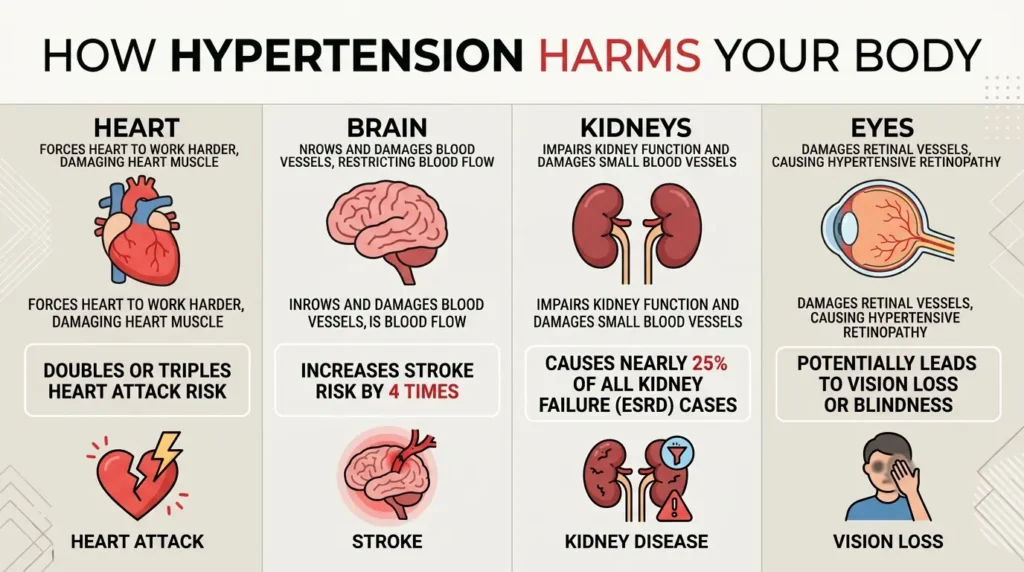
This article will answer the very questions you are thinking about.
The Plumbing Analogy
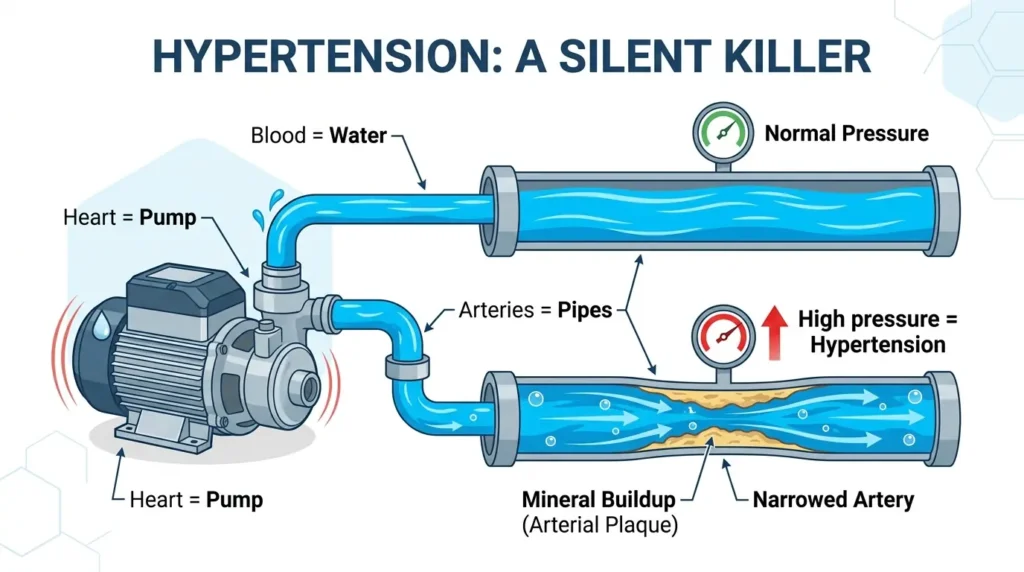
Think of a motor pumping water through a house’s pipes. When things are running smoothly, water flows at a normal, safe pressure.
But if a contractor installs low-quality, narrow pipes that offer high resistance to flow, the motor has to work much harder to keep the same amount of water moving.
As a result, the pressure inside the pipes skyrockets. If this high pressure continues completely unchecked, it will either quietly damage the inside of the pipes or cause them to burst entirely.
The same thing happens inside the human body. The heart acts as the motor for our circulatory system, continuously pumping blood through our blood vessels.
If a person is under chronic stress, struggles with obesity, eats a diet high in fatty foods, smokes, or suffers from certain hormonal imbalances, their blood vessels constrict (narrow). This heavily increases the resistance to blood flow.
Now, the heart has to work twice as hard to ensure blood reaches vital organs, causing the force against the vessel walls to rise.
This permanent increase in force is what we call High Blood Pressure or Hypertension.
The Diagnosis Process
Diagnosis requires regular and accurate blood pressure measurements. Healthcare professionals use an inflatable arm cuff and a digital monitor.
The device records two distinct numbers in millimeters of mercury. The top number represents systolic pressure. This number measures the force during a heartbeat.
The bottom number represents diastolic pressure. This number measures the force between heartbeats.
A single high reading does not confirm a diagnosis. Anxiety can raise blood pressure during a doctor visit.
Healthcare providers require at least two separate readings on different days. Patients can also monitor their numbers at home.
Medical guidelines separate blood pressure into specific categories:
| Category | Systolic (Top Number) | Diastolic (Bottom Number) |
| Normal | Less than 120 | And less than 80 |
| Elevated | 120 to 129 | And less than 80 |
| Stage 1 Hypertension | 130 to 139 | Or 80 to 89 |
| Stage 2 Hypertension | 140 or higher | Or 90 or higher |
Lifestyle Treatment Strategies
Treatment aims to lower numbers and protect target organs. Lifestyle modifications are the primary defense against early hypertension.
Patients must reduce their daily sodium intake. A low-salt diet quickly drops blood pressure levels. The DASH diet emphasizes fruits, vegetables, and whole grains.
This eating plan limits saturated fats and cholesterol.
Physical activity is equally important. Regular aerobic exercise strengthens the heart muscle. Individuals should walk or cycle for thirty minutes daily.
Weight loss also reduces the direct strain on the circulatory system. People must limit their alcohol consumption.
Smoking damages artery walls, so patients must quit smoking immediately. Stress management techniques like meditation also help lower daily readings.
Medical Treatment Options
Many patients require prescription medications alongside lifestyle changes. Doctors choose specific drugs based on age and medical history.
Diuretics are a common initial choice. These pills remove excess water and sodium through urination.
ACE inhibitors block a specific hormone, and this action relaxes the blood vessels. Angiotensin II receptor blockers perform a very similar role.
Calcium channel blockers prevent calcium from entering muscle cells of the heart and arteries. This blockage relaxes the blood vessels.
Beta-blockers reduce the workload on the heart, so the heart beats more slowly and with less force.
Patients often need a combination of two or more drugs. Regular follow-up appointments are necessary. Doctors monitor side effects and adjust dosages.
Home tracking logs provide valuable data for these appointments. Consistent treatment prevents permanent organ damage and extends life expectancy.
Article Written By:
Reviewed & Endorsed By:
Read more by Fitness-1st: