

Dehydration in children is a serious health condition that occurs when a child’s body loses more fluids than it receives creating imbalance of fluids in the body. Children are more sensitive to fluid loss compared to adults, which means dehydration can develop quickly, especially during summer, fever, vomiting, or diarrhea.
Understanding the signs of dehydration in children can help parents take early action and prevent dangerous complications. In this complete guide, you will learn about dehydration symptoms, causes, treatment methods, prevention tips, and when to seek medical help.
What is Dehydration in Children?
Dehydration happens when the body does not have enough water and essential electrolytes to function properly. Electrolytes such as sodium and potassium help regulate:
- Body temperature
- Muscle movement
- Blood circulation
- Nerve function
When children lose excessive fluids through sweating, diarrhea, vomiting, or fever, the body becomes dehydrated.
Common Causes of Dehydration in Children
Several factors can cause dehydration in kids.
Diarrhea
Diarrhea is one of the most common causes of dehydration in children because the body loses water rapidly.

Vomiting
Frequent vomiting prevents children from retaining fluids and nutrients.
Fever
A high fever increases fluid loss through sweating and rapid breathing.
Hot Summer Weather
Children who play outside for long periods in hot temperatures may lose large amounts of water through sweat.
Not Drinking Enough Water
Some children avoid drinking fluids during illness, increasing dehydration risk.
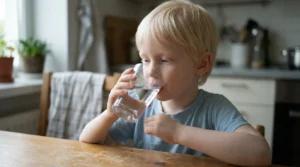
Physical Activity
Running, sports, and outdoor activities without proper hydration can lead to dehydration.
Early Signs of Dehydration in Children
Recognizing early dehydration symptoms can prevent severe complications.
Mild Dehydration Symptoms
- Dry lips and dry mouth
- Increased thirst
- Dark yellow urine
- Reduced urination
- Dry skin
- Mild tiredness
- Dizziness
- Irritability
- Headache
Signs of Dehydration in Babies
- Fewer wet diapers
- Dry tongue
- Fussiness
- Reduced feeding
Moderate Dehydration Symptoms
- Sunken eyes
- No tears while crying
- Fast heartbeat
- Rapid breathing
- Cool or pale skin
- Weakness
- Excessive sleepiness
- Muscle cramps
- Reduced alertness
At this stage, parents should contact a healthcare professional.
Severe Dehydration in Children
Severe dehydration is a medical emergency and requires immediate treatment.
Symptoms Include:
- No urine for several hours
- Very dry mouth and tongue
- Sunken soft spot in babies
- Extreme drowsiness
- Confusion
- Rapid weak pulse
- Cold hands and feet
- Difficulty waking up
- Fainting
Seek emergency medical care immediately if these symptoms appear.
How to Check Dehydration in Children at Home
Parents can monitor dehydration using simple methods.
Check Urine Color
- Light yellow urine = healthy hydration
- Dark yellow urine = dehydration warning
Monitor Wet Diapers
Babies should normally have at least:
- 6 wet diapers per day
Skin Pinch Test
Gently pinch the child’s skin:
- If it returns slowly, dehydration may be present.
Observe Energy Levels
A dehydrated child often appears:
- Less active
- Weak
- Unusually sleepy
Best Drinks for Dehydration in Children
Keeping children hydrated with the right fluids is extremely important.
Recommended Drinks

- Water
- Oral Rehydration Solution (ORS)
- Breast milk
- Formula milk
- Coconut water
- Clear soups
Drinks to Avoid
- Soft drinks
- Energy drinks
- Excess sugary juices
- Caffeinated beverages
Home Remedies for Mild Dehydration in Children
Give Small Sips Frequently
Offer fluids every few minutes rather than large amounts at once.
Use ORS
ORS helps replace fluids and electrolytes lost during illness.
Continue Feeding
Healthy meals support faster recovery.
Keep the Child Cool
Avoid excessive heat exposure.
Encourage Rest
Rest helps the body recover more effectively.
How to Prevent Dehydration in Children
Preventing dehydration is easier than treating it.
Hydration Tips for Parents
- Encourage regular water intake
- Offer fluids during playtime
- Increase fluids during fever
- Use ORS during diarrhea
- Avoid excessive junk food
Best Hydrating Foods for Kids
- Watermelon
- Oranges
- Cucumbers
- Strawberries
- Yogurt
- Soups
When to See a Doctor
Consult a doctor if your child:
- Cannot keep fluids down
- Has severe diarrhea
- Has repeated vomiting
- Becomes unusually sleepy
- Has no urine for several hours
- Develops high fever
- Shows confusion or breathing difficulty
Frequently Asked Questions
What are the first signs of dehydration in children?
Dry mouth, thirst, dark urine, and reduced urination are usually the earliest signs.
Can dehydration cause fever in kids?
Yes, dehydration may worsen fever symptoms and increase body temperature.
How long does dehydration last in children?
Mild dehydration may improve within hours after proper hydration, while severe dehydration may require hospital treatment.
Is ORS better than plain water?
Yes. ORS replaces both fluids and electrolytes lost during illness.
Can babies become dehydrated quickly?
Yes, infants are highly vulnerable because their bodies lose fluids rapidly.
Article Written By:
Reviewed & Endrosed By: